
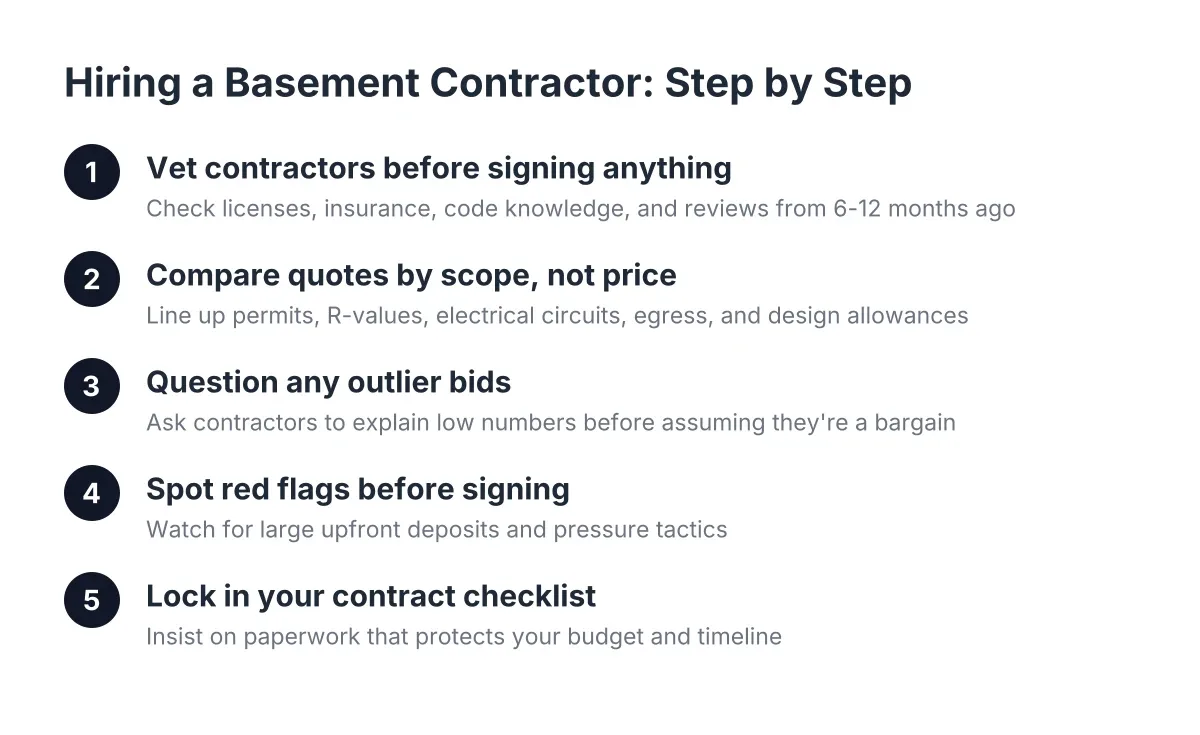
Hiring a Basement Contractor — Complete Guide
Hiring the right basement finishing contractors can be the difference between a basement your family uses every day and a half-finished project that drains your budget. This guide walks you through the full decision: how to compare quotes, what questions to ask, which red flags matter, and what Aurora's permit and egress rules mean for your project. It matters because a basement finish is a major investment, and according to the JLC (Journal of Light Construction) Cost vs. Value Report, a basement remodel returns 71% of its cost at resale on average. With that much money on the table, you deserve a clear way to vet the people you hire. Below you will find a complete roadmap, plus links to in-depth guides on every step.
What You'll Find in This Guide
- Basement Contractor Warranty Coverage: What Actually Protects Your Investment
- How to Vet Basement Contractor Reviews and References in Aurora, CO
- Questions to Ask Basement Contractors Near Me Before You Sign Anything
- Hiring a Basement Contractor Terms Explained: A Plain-English Glossary
- How Much Does Hiring a Basement Contractor Cost?
- 8 Red Flags When Hiring a Basement Contractor in Aurora (2026 Guide)
- Basement Contractor vs. General Contractor: 8 Ways to Pick the Right Pro for Your Basement Remodel
- Basement Contractor Licensing and Insurance in Colorado: What to Verify Before You Sign
Comparing Basement Finishing Contractors and Their Quotes
Most homeowners collect two or three bids, pick the middle number, and hope for the best. That approach feels safe, but it skips the step that matters most: understanding what each quote actually includes. Two bids for the same basement can differ by thousands of dollars simply because one includes egress window work, permit fees, and finished trim while the other quietly leaves them out.
Start by asking each company for a written, itemized estimate. A lump-sum number on a single page tells you nothing. In contrast, a line-item quote shows you where the money goes: framing, electrical, plumbing rough-in, drywall, flooring, windows, and permits. Once every bid uses the same level of detail, you can compare them fairly. Our guide on what drives basement contractor cost breaks down each of those factors so you know which line items deserve a second look.
Beyond the numbers, pay attention to how each company handles your questions. A contractor who explains the "why" behind a line item is showing you how they will communicate for the next several months. However, a contractor who gets defensive about an itemized breakdown is showing you something too.
Questions That Reveal More Than Price
Price is only one axis of comparison. Additionally, you want to know who will actually be in your home, how change orders get priced, and what happens if the project uncovers a surprise behind a wall. For example, ask who pulls the permit, whether subcontractors carry their own insurance, and how the payment schedule ties to completed milestones. We put together a full list of questions to ask basement contractors before you sign so you walk into every meeting prepared.
One more comparison point deserves attention: the warranty. A strong quote with a weak warranty is a weak quote. As a result, read the warranty section of every proposal before you compare totals, and treat a vague two-sentence warranty as a meaningful cost difference.
Red Flags, Licensing, and How to Avoid Basement Remodel Scams
Basement remodel scams rarely look like scams at first. Instead, they look like a great price, a friendly handshake, and a request for a large cash deposit to "lock in material costs." By the time the pattern becomes obvious, your deposit is gone or your project has stalled with open walls and no permit on file.
The good news is that most problems announce themselves early if you know what to look for. Pressure to sign today, a refusal to put the scope in writing, vague answers about permits, and a deposit request far above what the work requires are all classic warning signs. We cover these and more in our guide to basement contractor warning signs in Aurora, written from the contractor's side of the table.
Licensed vs. Unlicensed Basement Contractors
The licensed vs. unlicensed question is not a technicality. In Aurora, finishing a basement involves electrical, plumbing, and structural work that the city inspects for a reason. An unlicensed contractor may offer a lower price, but you inherit the risk: failed inspections, unpermitted work that surfaces when you sell, and no insurance behind the labor if someone gets hurt in your home. Before any money changes hands, verify the license with the city and ask for current certificates of insurance. Our walkthrough on contractor license verification in Colorado shows you exactly what to check and how.
Reading Reviews and Checking References the Right Way
Reviews help, but only if you read them correctly. A five-star average built on twelve vague reviews tells you less than a four-and-a-half-star average with detailed accounts of real basement projects. Look for reviews that mention permits, inspections, timelines, and how the company handled problems, because every project has problems. Then go a step further and call references directly. For a full checklist, see our guide on how to vet basement contractor reviews and references. Ten minutes on the phone with a past customer often tells you more than an hour of reading online.
Permits, Egress Windows, and What Aurora Code Means for Your Basement
Many homeowners treat permits as red tape. In practice, the permit process is your best protection, because it puts an independent city inspector between you and any contractor tempted to cut corners. If a contractor suggests skipping the permit to save money, that is not a discount. It is a transfer of risk from their business to your home.
Aurora requires permits for basement finishing work that involves framing, electrical, plumbing, or new windows, and the City of Aurora handles plan review and inspections locally. A contractor who works in Aurora regularly should be able to explain the permit steps without hesitation. That said, you do not need to become a code expert yourself. You just need a contractor who treats the inspector as a colleague rather than an obstacle.
Why Egress Windows Decide Whether Your Basement Counts as Living Space
Egress is the code topic that catches the most homeowners off guard. If your finished basement will include a bedroom, code requires an emergency escape and rescue opening in that room. Under the IRC 2024 code, every basement sleeping room needs an opening with at least 5.7 square feet of net clear opening area, according to EgressUSA. Additionally, The Great Egress Co. notes that these openings must have a maximum sill height of 44 inches above the finished floor and a minimum net clear width of 20 inches. A window that misses any of those numbers fails inspection, no matter how nice it looks.
This is why egress belongs in your hiring conversation, not just your design conversation. Ask every bidder how they size egress windows, who cuts the foundation, and whether window wells and drainage are included in the quote. Moisture matters here too, because the American Society of Home Inspectors estimates that more than 60% of U.S. homes with basements experience some degree of water penetration or moisture problems. Consequently, a poorly installed window well can undo an otherwise excellent finish.
Finally, make sure you understand the vocabulary before you sign. Terms like net clear opening, rough-in, and change order carry real contractual weight. Our plain-English glossary for hiring a basement contractor translates them all. And if you are still deciding what kind of pro to hire in the first place, our comparison of basement contractors vs. general contractors will help you match the professional to the project. Dedicated basement finishing contractors live in this code territory daily, which is exactly why the questions in this guide work so well as a filter.
Ready to Get Started?
We finish and remodel basements for homeowners in Aurora, CO and the immediate surrounding area, with design help, permit assistance, and egress window installation handled as part of the project. If you are comparing basement finishing contractors and want a real number instead of a guess, request a free estimate. Call us or send a request, and we will walk your basement with you and put the scope in writing.